Retail Media Networks and 3D Commerce: How Immersive Stores Improve Shopper Data

Retail media networks are no longer limited to sponsored product tiles, display ads, and basic audience segments. As retailers build richer digital shopping environments, 3D commerce is becoming a practical way to understand how shoppers explore, compare, ask questions, and build confidence before they buy.
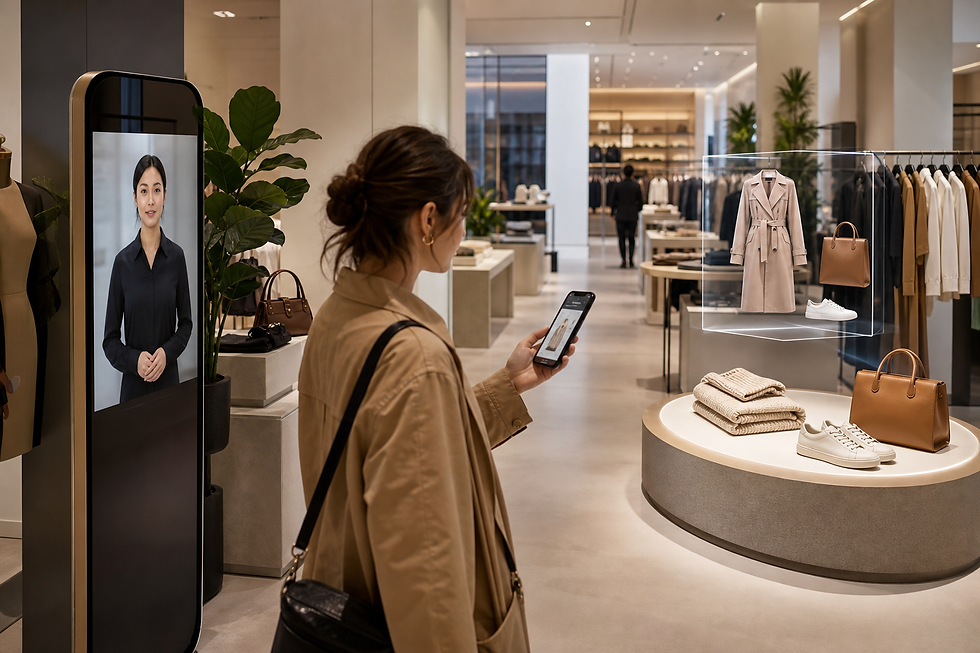
For Mimic Retail, this matters because immersive stores can connect merchandising, product visualization, AI guidance, and measurable retail media in one experience. A shopper can enter a virtual store, interact with a product, ask a virtual assistant a question, test a look or setup, and move toward purchase without leaving the branded environment.
The goal is not to collect more data for its own sake. The goal is to capture better consented signals that explain what shoppers actually need, which media moments are useful, and where a brand experience helps or hurts conversion.
Table of Contents
What retail media networks need from 3D commerce
A retail media network becomes stronger when it sits close to real shopper intent. Standard media placements can show who clicked, who viewed, and who purchased. A 3D commerce experience can add context around why a shopper hesitated, which product details they explored, and what kind of assistance moved them forward.
This is where retail media and immersive commerce start to work together. A brand can sponsor a virtual shelf, a product trial, an AI-guided buying path, a seasonal showroom, or a category education zone. The retailer can then measure engagement in a way that is closer to the shopper's decision process than a flat impression count.
Mimic Retail has already explored the foundation through retail digital twins and immersive retail advertising. This article builds on those ideas by focusing on the shopper data layer that makes immersive media valuable to both retailers and brand partners.
Retailers need clean signals that show attention, comparison, assistance, confidence, and intent.
Brands need proof that sponsored experiences are helping shoppers make decisions, not just creating novelty.
Shoppers need transparency, relevance, speed, and control over how personalization is used.
How immersive stores improve shopper data
Immersive stores create richer behavioral signals because the shopper is doing more than scrolling. They are entering rooms, approaching products, rotating items, choosing views, asking questions, comparing options, and sometimes trying products through AR or simulated environments.
Those interactions can reveal the difference between casual attention and meaningful intent. A two-second hover may suggest curiosity. A product rotation followed by size comparison and a virtual assistant question suggests active consideration. A return visit to the same showroom may indicate a decision that needs one more trust cue.

A virtual shopping assistant can also turn anonymous friction into useful pattern data. If many shoppers ask the same fit, compatibility, or availability question, the retailer can improve product pages, store scripts, recommendations, signage, and future retail media creative.
Product interaction depth: rotations, zooms, hotspots, configurations, try-on attempts, and comparison steps.
Assistance signals: questions asked, answers selected, unresolved issues, and handoffs to human support or checkout.
Journey signals: entry source, zone movement, repeat visits, cart movement, saved items, and post-visit conversion behavior.
Customer journey signals worth measuring
The best retail media programs do not treat the journey as one large funnel. They break it into moments where a shopper needs something different. A discovery moment needs relevance. A comparison moment needs clarity. A confidence moment needs proof. A conversion moment needs simplicity.
Discovery
Measure showroom entries, source channels, branded-zone visits, product category movement, and first interaction. These signals show which retail media placements attract qualified attention.
Consideration
Measure product detail engagement, comparison activity, assistant questions, configuration attempts, saved products, and repeat product views. These signals show which content is answering real buyer questions.
Confidence and conversion
Measure try-on completion, size or fit confirmation, cart movement, coupon redemption, appointment requests, store visit intent, and assisted conversion. These signals help connect immersive media to business outcomes.

For categories where uncertainty is high, such as fashion, beauty, furniture, footwear, and accessories, virtual try-on technology gives retail media a stronger role. The media experience is not just promotional. It directly helps the shopper decide.
Benefits for retailers and brands
Retailers benefit because immersive commerce can increase the value of owned media inventory. A virtual store, product twin, or AI-guided showroom can become a premium media surface with measurable interaction rather than a static ad slot.
Brands benefit because they can explain products in a richer way. Instead of fighting for attention with a small banner, a brand can help shoppers choose, compare, style, configure, or understand a product in context. That makes the advertising feel closer to service.
Better shopper insight: teams see which product details, questions, and comparison moments matter most.
Higher media value: sponsored immersive zones can justify premium packages when they show qualified engagement.
Stronger conversion support: visual confidence, guided assistance, and product context reduce hesitation before checkout.
Reusable assets: 3D product models and store environments can support ecommerce, ads, training, sales, and events.
This is also why personalized shopping experiences are becoming more important. The future of retail media is not only about audience targeting. It is about matching context, guidance, and timing to a shopper's current need.
Data requirements checklist
A 3D retail media pilot needs a clean data foundation before launch. If product information is incomplete, analytics events are unclear, or privacy language is vague, the experience may look polished but fail as a business system.
Product data: names, descriptions, variants, pricing, inventory, category rules, compatibility, and key selling points.
3D and visual assets: product models, textures, store scenes, AR-ready files, lifestyle images, and brand guidelines.
Journey events: showroom entry, product view, hotspot click, assistant question, comparison, try-on, save, cart, and handoff.
Consent and governance: data notices, personalization controls, retention rules, aggregation standards, and campaign permissions.
Operational links: ecommerce, CRM, loyalty, staff workflows, media reporting, and merchandising dashboards.
When retailers connect these inputs, 3D commerce becomes more than an experience layer. It becomes a measurable operating system for shopper confidence, campaign learning, and category improvement.
Step-by-step implementation plan
Start small enough to measure clearly. A retail media network does not need a fully simulated mall to prove value. It needs one category, one campaign partner, one shopper decision, and a clean baseline.
Choose the pilot category: pick a product area where shoppers need visual proof, guidance, or comparison support.
Define the media objective: awareness, education, lead capture, assisted conversion, return reduction, or loyalty engagement.
Build the experience: create the virtual zone, product twins, assistant flows, branded content, and commerce handoff.
Instrument the journey: map the key events before launch so reporting is useful from the first visit.
Test with real users: watch where shoppers pause, what they ask, which content helps, and where they exit.
Scale only after proof: expand to more categories, stores, partners, or seasonal campaigns after the measurement model works.

This phased approach connects naturally with smart retail solutions because the best immersive programs do not end with a dashboard. They create signals that help merchandising, media, service, and store teams take clearer action.
Privacy and responsible AI
Retail media networks already depend on trust. 3D commerce adds new responsibilities because shoppers may interact with AI assistants, AR try-on tools, personalized recommendations, loyalty data, and behavior analytics inside the same journey.
Responsible implementation means being clear about what is measured, why it improves the experience, and how the shopper can control personalization. It also means designing AI assistants with boundaries. They should answer approved product questions, avoid unsupported claims, disclose uncertainty, and hand off when a human or standard checkout path is better.
Use consented, necessary data rather than collecting every possible interaction.
Report campaign performance in aggregated form when individual identity is not required.
Give shoppers clear routes to continue without personalization or AI assistance.
Review assistant scripts, recommendation logic, and sponsored content for accuracy and fairness.
KPIs that prove retail media lift
A strong measurement plan combines media metrics, commerce metrics, and experience metrics. If the program only reports views, it misses the reason 3D commerce matters. If it only reports sales, it misses the earlier signals that show why a shopper became ready to buy.
Awareness and engagement
Track showroom visits, branded-zone entries, dwell time, interaction depth, repeat visits, QR or mobile entry rate, and sponsored content completion.
Commerce and confidence
Track add-to-cart rate, assisted conversion, try-on completion, saved items, product confidence surveys, return-rate movement, coupon redemption, and appointment booking.
Operational learning
Track campaign setup time, asset reuse, analytics coverage, staff handoff quality, top unresolved questions, and category-level learning that can improve future merchandising.

Retailers that already use AI for ecommerce can connect these metrics to broader automation, support, and personalization programs so immersive media does not sit in isolation.
Mistakes to avoid
The most common mistake is treating 3D commerce as a visual layer only. If the experience is beautiful but does not answer shopper questions, connect to commerce, or produce usable measurement, it will be hard to justify as retail media.
Do not launch without a clear campaign objective and baseline.
Do not bury privacy language or make personalization feel unavoidable.
Do not use AI assistants that cannot answer practical product, fit, stock, or comparison questions.
Do not let sponsored moments interrupt the journey when they should support it.
Do not scale to many categories before one pilot proves the measurement model.
Retail media becomes more durable when the shopper feels helped. If a virtual showroom, AI guide, or AR moment reduces uncertainty, the campaign has a reason to exist beyond novelty.
Future trends in immersive retail media
Retail media is moving toward full-funnel experiences. Instead of separating awareness, consideration, and conversion into different tools, retailers will package immersive spaces where shoppers can discover, test, ask, compare, and buy in one measurable journey.
Expect more AI-guided product discovery, reusable 3D product twins, virtual store sponsorships, AR try-on linked to loyalty, and retail media reports that include confidence and interaction quality, not only reach. VR shopping experiences will also support categories where size, scale, material, fit, or placement matters before purchase.
The strongest teams will not chase every new interface. They will build a reliable asset pipeline, a clear data model, and a shopper-first design practice. That combination makes immersive retail media easier to reuse, easier to measure, and easier to trust.
FAQ
What is a retail media network in simple terms?
A retail media network is a retailer-owned advertising system that lets brands reach shoppers through the retailer's channels, data, and commerce moments. It can include website placements, app placements, store screens, sponsored content, loyalty media, and immersive experiences.
How does 3D commerce improve shopper data?
3D commerce shows how shoppers interact with products, environments, assistant prompts, comparisons, try-on flows, and branded zones. These signals can reveal intent and uncertainty more clearly than a simple page view or ad click.
Which shopper signals are most useful for retail media?
Useful signals include product interaction depth, assistant questions, comparison behavior, try-on completion, saved items, repeat visits, cart movement, coupon redemption, and assisted conversion. The value comes from connecting signals to clear shopper decisions.
Do immersive retail media campaigns need AI assistants?
Not always. A campaign can work with a 3D showroom, AR try-on, product configurator, or virtual event. AI assistants are useful when shoppers need guided answers, product comparison, styling advice, or support that can be measured and improved.
How should privacy be handled in 3D commerce?
Privacy should be built into the experience. Retailers should explain what is measured, why it improves shopping, how personalization works, and how shoppers can continue without personalization. Aggregated reporting should be used whenever individual identity is unnecessary.
Which product categories benefit most from immersive retail media?
Fashion, beauty, footwear, furniture, home decor, electronics, luxury, automotive, and complex comparison categories benefit because shoppers need visual context, confidence, guidance, or fit validation before purchase.
What KPIs should brands track in immersive retail media?
Brands should track qualified engagement, interaction depth, dwell time, assistant completion, try-on completion, add-to-cart rate, assisted conversion, coupon redemption, product confidence, repeat visits, and return-rate movement.
Where should retailers start with 3D commerce media?
Start with one category, one sponsor objective, one shopper decision, and one clean analytics plan. A narrow pilot is easier to measure, improve, and scale than a large immersive environment with unclear goals.
Conclusion
Retail media networks become more valuable when they help shoppers make better decisions. 3D commerce gives retailers and brands a richer way to support discovery, comparison, confidence, and conversion while producing data that is more meaningful than a flat impression count.
The winning approach is practical: choose the right category, build a useful immersive moment, measure the signals that matter, respect shopper control, and turn every campaign into learning that improves the next one.
Mimic Retail builds immersive retail experiences that connect virtual stores, AI shopping support, product visualization, and measurable shopper journeys. Explore Mimic Retail services or contact the team to plan a 3D commerce retail media pilot that shoppers can use and teams can measure.


Comments