Smart retail solutions for real-time store intelligence

Retail teams are not short on data. They are short on clarity in the moment that matters, which is while a shopper is still in front of the fixture, while a queue is still building, while a promo is still live, and while a store team can still fix the issue.
At Mimic Retail, we build immersive retail experiences that combine 3D environments, AI-driven interactions, and measurement across touchpoints. That means real-time store intelligence is not a standalone dashboard. It is a layer that connects the experience, the content, and the operational signal so teams can act with confidence. For a concise overview of what we build and why, start with our services overview on the Mimic Retail website.
Mimic Retail’s work is grounded in 13+ years across AI, 3D, and XR, with a track record of large-scale digital human creation and multi-sector deployments.
In this article, you will learn what “real-time” can look like on the shop floor, what signals actually matter, how to structure a pipeline that store teams trust, and how smart retail solutions can support measurable, repeatable decisions without turning the store into a lab. Explore our approach to immersive retail buildouts through our core offering at https://www.mimicretail.com/services.
Table of Contents
Why is real-time intelligence changing store operations?
Stores have always run on signals. The difference now is speed, granularity, and the ability to connect signals to an experience layer. When it works, real-time store intelligence reduces guesswork and makes actions feel obvious.
A practical way to think about smart retail solutions is that they translate messy store reality into a small set of decision-ready moments. Not every metric needs to be live. The ones that matter are the ones tied to customer experience, safety, conversion friction, and execution.
Here are the moments retail teams typically care about, and what “real time” means in each:
Queue pressure: A queue is not a weekly KPI. It is a moment that changes conversion right now, especially for convenience, beauty, and high-traffic fashion.
Promo compliance: If a promo fixture is missing signage or product, the “campaign” is not live in that store, no matter what the calendar says.
On-shelf availability: Out-of-stock items are often “in the building,” just not where the shopper needs them.
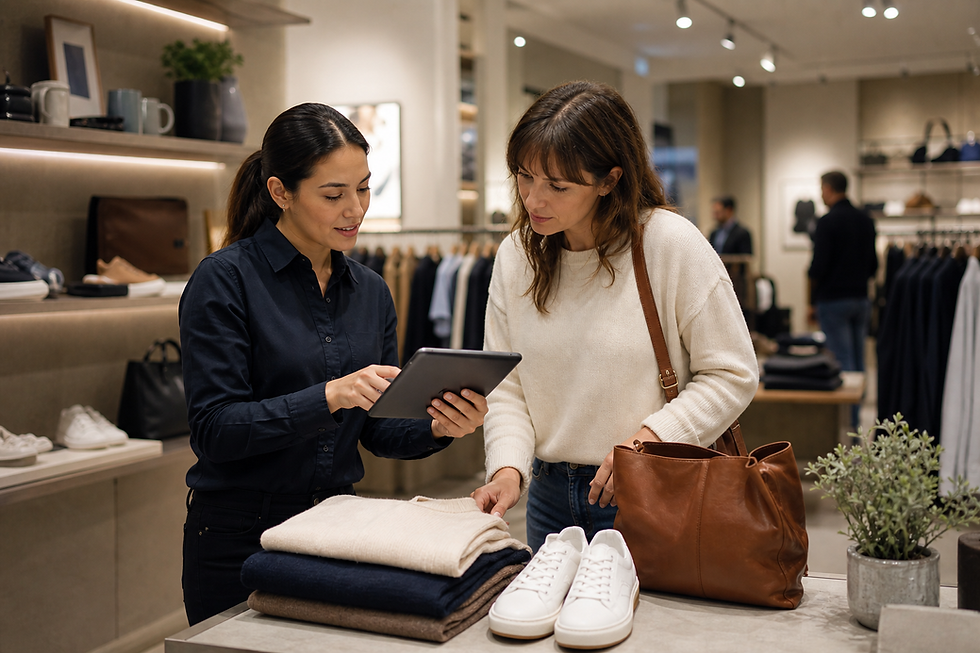
Service load: Some categories need help. If your staff is busy, shoppers still need answers, which is where AI shopping assistant experiences can bridge the gap.
Engagement quality: A crowded area can be bad if shoppers are stuck, or good if they are exploring. You need context, not just counts.
This is also where in-store computer vision starts to matter. Not as surveillance, and not
as a replacement for store teams. It matters because it can detect patterns that are invisible in POS logs, like stalled journeys, fixture confusion, and repeated pickup without purchase.
When you connect those moments to a store intelligence dashboard, teams stop debating what happened and start deciding what to do next.
Building a practical intelligence pipeline from store signals
The biggest mistake with smart retail solutions is treating them like a single vendor install. Real-time store intelligence is a pipeline. It needs inputs, decision logic, outputs, and feedback loops. It also needs to respect how stores actually run.
A pipeline that works usually follows this flow:
Capture signals that reflect: This might include POS events, footfall counters, shelf sensors, staff handheld inputs, planogram data, and in-store computer vision. It can also include experience-layer signals from interactive retail media, 3D environments, or assisted shopping.
Normalize signals into retail-ready events: Raw data is rarely actionable. You need normalized events like:
“Queue exceeds threshold for 6 minutes.”
“Fixture dwell rise, but conversion drops”
“High intent queries rising for one SKU”
“Promo zone engagement is high, but low pickup.”
Decide what is urgent vs informativeReal-time systems fail when they alert on everything. Good systems prioritize:
Exceptions that affect sales or experience today
Patterns that indicate a broken flow
Moments where staff can actually intervene
Deliver the signal where the work happens: A store intelligence dashboard is useful for leadership, but store teams often need a simpler surface:
A task queue for managers
A nudge for associates
A live status view for customer service
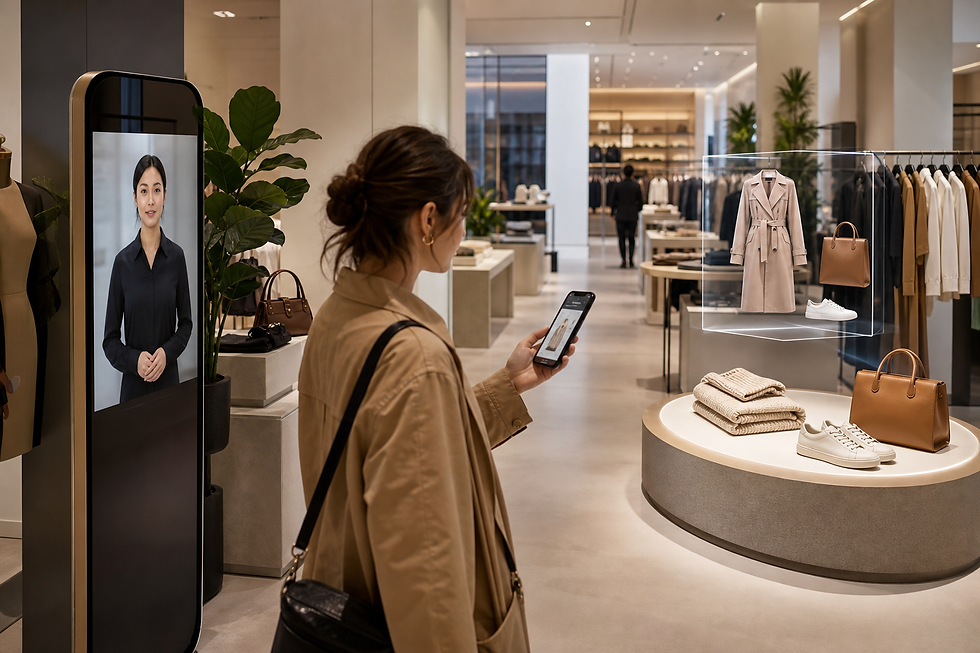
A shopper-facing layer via an AI shopping assistant
Close the loop with measurement: This is where omnichannel measurement becomes the difference between “cool dashboard” and operational change. If a store team responds to an alert, the system should track:
Did the queue drop?
Did the conversion recover?
Did the experience flow improve?
Did the issue repeat next week?
The measurement layer matters because it creates trust. Without it, store teams experience alerts as noise and leadership experiences dashboards as theater.
If you are building toward experiential retail, the pipeline also has to support immersive content operations. That is where Mimic Retail’s stack across AI and XR becomes relevant, including 3d scanning for products and environments, motion capture for lifelike performance, and real-time rendering for cross-device delivery.
Smart retail stack comparison for store intelligence workflows
Below is a practical comparison table that shows how teams typically move from basic reporting to real-time store intelligence, and where smart retail solutions fit.
Workflow layer | What it looks like in store ops | Strengths | Limits | Where it fits best |
Weekly reporting | Post-period reports, manual review | Easy to start | Too slow for store moments | Strategic planning |
Near-real-time dashboards | Hourly refresh dashboards | Better visibility | Still passive, low action rate | Regional oversight |
Exception alerting | Rules-based alerts and tasks | Action-oriented | Can become noisy | Store execution |
Behavior-aware intelligence | In-store computer vision, journey signals, context | Finds friction patterns | Requires governance and tuning | Experience optimization |
Experience-linked measurement | Omnichannel measurement tied to interactions | Proves what changed | Needs clean instrumentation | Immersive retail + media |
Applications In Retail
Real-time intelligence works best when it is anchored to specific use cases that teams can recognize immediately.
Queue intervention: Trigger staffing shifts, open temporary checkout, or deploy a guided self-serve flow so shoppers keep moving.
Promo health monitoring: Detect missing price cards, empty bays, or mis-merchandised endcaps and push fixes to the right role.
Assisted product discovery: Combine store status with an ai shopping assistant so shoppers get answers even when associates are busy.
Experience zone optimization: Track dwell time tracking around interactive displays and adjust content pacing, messaging, or placement.
Returns prevention in experience design: When you add virtual shopping or immersive product exploration, the goal is fewer surprises post-purchase. This is closely aligned with how VR shopping can reduce returns and uncertainty.
Availability problem solving: Use inventory exception alerts to flag repeated “phantom out of stock” patterns by location, not just by SKU.
Journey diagnostics: Use shopper journey mapping to locate where customers stall, loop, or abandon, then redesign the flow.
Benefits
When implemented with discipline, smart retail solutions create benefits that are easy for store teams to feel and easy for leadership to evaluate.
Decision speed: Teams move from weekly debates to same-shift actions using real-time store intelligence.
Operational focus: Exceptions are surfaced as a short list instead of a sea of charts in a store intelligence dashboard.
Experience consistency: Stores run closer to the brand’s intended journey, even when staffing and footfall fluctuate.
Measurement credibility: You can connect actions to outcomes using conversion uplift measurement, not just anecdotal feedback.
Smarter assistance: An AI shopping assistant can reduce pressure on staff by handling common questions and guiding discovery.
Better content performance: Interactive media and immersive zones become measurable assets through omnichannel measurement.

Considerations For Retail Teams
Real-time systems succeed or fail on rollout design. These are the realities teams should plan for early.
Signal discipline: Define what triggers inventory exception alerts and what stays as “info,” so stores do not get flooded.
Role clarity: Decide who owns each response, from manager tasks to associate actions to HQ interventions.
Calibration cycles: Expect tuning. In-store computer vision and journey logic need real store feedback to avoid false positives.
Data trust: Show the “why” behind a flag inside the store intelligence dashboard, so teams believe the system.
Instrumentation standards: If you want omnichannel measurement, align event naming across POS, web, app, and experience layers.
Operational resilience: Design for patchy connectivity and device variance. “Real time” should degrade gracefully.
Inventory context: Stores need intelligence that respects stock realities, including upstream risk signals. If you are also tackling stockout prediction, align store intelligence with supply chain AI workflows.
Future Outlook
The next phase of smart retail solutions will not be “more data.” It will be more usable intelligence that is embedded directly into the shopping experience.
Expect three shifts:
First, AI assistance becomes ambient. The AI shopping assistant will move from a novelty interface to a practical layer that can answer product questions, guide to the right aisle, and adapt to real store conditions.
Second, immersive retail becomes measurable by default. Virtual stores, interactive displays, AR try-on moments, and XR activations will be designed with omnichannel measurement from day one, so teams can compare experience formats and justify investment with evidence.
Third, content pipelines become operational pipelines. Tools like 3d scanning, motion capture, and real-time rendering will be used not only to build beautiful assets, but to keep them consistent across touchpoints and responsive to store realities.
If you want a clearer view of how these systems connect, our technology overview explains the building blocks behind immersive experiences and measurable interactivity.

Conclusion
Real-time store intelligence is not about watching stores. It is about helping store teams run cleaner, calmer, and more consistent experiences for shoppers, while giving leadership a credible way to learn what is actually working.
The strongest smart retail solutions are the ones that connect operations and experience. They combine practical exception handling with shopper-facing guidance, and they treat measurement as part of the design, not a report at the end.
Mimic Retail builds across AI, 3D, XR, and analytics with a retail-first mindset, from concept through deployment. If you want to understand who we are and how we work, start here.
FAQs
What are smart retail solutions in a store context?
They are systems that connect store signals, shopper interactions, and operational workflows so teams can act faster. In practice, they often include exception alerts, real-time dashboards, and experience-linked measurement.
What is real-time store intelligence supposed to help with first?
Start with moments that store teams already feel as pain: queues, promo compliance, on-shelf availability, and service load. Those areas produce clear actions and fast learning.
How does a store intelligence dashboard avoid becoming “just another screen”?
It needs a short list of prioritized exceptions, clear ownership for each action, and proof that responses changed outcomes. Otherwise it becomes passive reporting.
Where does in-store computer vision actually add value?
It adds value when you need context about behavior and flow, such as stalled journeys or fixture confusion, and when governance is strong enough to keep it focused on experience improvement.
Why does omnichannel measurement matter for store intelligence?
Because store actions affect digital behavior and vice versa. Omnichannel measurement connects interventions to outcomes across POS, web, app, and assisted shopping, so leadership can learn what is scalable.
What should retailers measure beyond sales?
Look at dwell time tracking, task completion, service responsiveness, and conversion uplift measurement around key zones. These reveal friction and improvement earlier than weekly revenue reports.
How do inventory exception alerts fit into real-time decisioning?
They help teams spot repeated availability problems by store and zone, not just by SKU. The best alerts also show the likely cause, so fixes are faster.
Can smart retail solutions support immersive retail formats too?
Yes. When intelligence is tied to experience signals like engagement depth and assisted journeys, it can support virtual stores, XR activations, and interactive retail media with measurable feedback loops.

Comments