AI in Retail Supply Chains: Predicting Stockouts Before They Happen
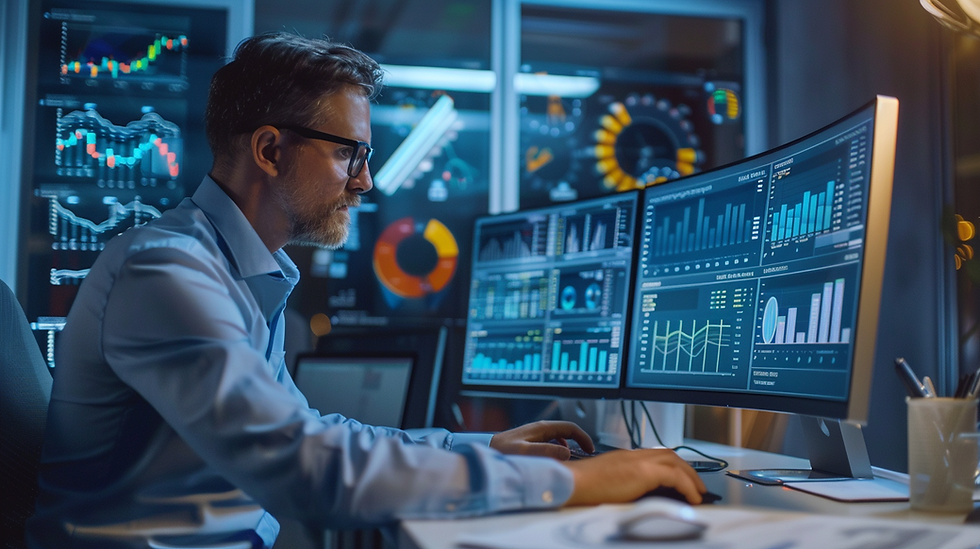
Retail supply chains are under constant pressure. Demand fluctuates by region, promotions spike traffic unexpectedly, and logistics disruptions ripple across fulfillment networks. When shelves go empty or popular SKUs vanish online, the cost is immediate: lost revenue, frustrated customers, and damaged brand trust. AI in retail is now the most effective way to predict stockouts before they happen and to keep inventory flowing with precision.
By analyzing real-time signals across sales, logistics, and customer behavior, retail AI systems anticipate demand shifts, flag risk early, and automate replenishment decisions. Retailers using intelligent supply chain tools supported by Mimic Retail move from reactive firefighting to proactive control.
This article explains how AI predicts stockouts, the data signals that matter most, and how retailers deploy AI to protect availability across global supply chains.
Table of Contents
What does AI in retail supply chains mean?
AI in retail supply chains refers to the use of machine learning, predictive analytics, and automation to manage inventory flow from suppliers to shelves and customers. Instead of relying on static forecasts or manual rules, AI systems learn continuously from live data.
These systems analyze:
sales velocity by SKU and location
online browsing and search behavior
promotion calendars and campaign impact
supplier lead times and reliability
logistics performance and delays
seasonality and regional trends
The result is an adaptive supply chain that anticipates problems before they impact availability. This intelligence aligns with the automation foundations outlined on the Mimic Retail tech page.
Why stockouts remain a major retail risk?
Stockouts are costly because they compound quickly. A single missed replenishment can cascade across channels.
Common causes include:
inaccurate demand forecasts
delayed supplier shipments
sudden demand spikes
poor allocation across regions
disconnected online and store inventory
manual planning limitations
When a shopper cannot find an item, they often switch brands entirely. Predicting stockouts early is critical to protecting lifetime value.
The data signals AI uses to forecast shortages
AI excels because it correlates many weak signals that humans cannot process at scale.
Key signals include:
acceleration in sell-through rates
abnormal cart additions without purchases
rising search queries for specific items
promotion-driven uplift patterns
regional weather or event impacts
supplier performance drift
transit delays and port congestion
By combining these inputs, retail AI systems surface risk scores for each SKU and location, days or weeks before a stockout occurs.
Demand forecasting with machine learning
Traditional forecasting often uses averages and historical trends. Machine learning improves accuracy by modeling nonlinear behavior.
AI-driven demand forecasting:
adapts to real-time changes
accounts for promotions and cannibalization
adjusts by region and channel
learns from past forecast errors
recalibrates continuously
This capability complements operational scaling strategies described in AI for e-commerce growth, where automation supports global expansion without added headcount.
Reactive Inventory Planning vs AI-Driven Prediction
Area | Reactive Planning | AI-Driven Prediction |
Forecast updates | Periodic | Continuous |
Data sources | Limited | Multi-signal, real-time |
Stockout detection | After it happens | Before it happens |
Allocation decisions | Manual | Automated and optimized |
Regional accuracy | Low | High, location-specific |
Promotion impact | Estimated | Modeled precisely |
Response speed | Slow | Immediate |
Revenue protection | Limited | Maximized |
AI for replenishment and allocation decisions
Predicting a stockout is only useful if action follows. AI systems automate replenishment with precision.
They can:
trigger reorder points dynamically
recommend optimal order quantities
reallocate stock between regions
prioritize high-margin or high-demand SKUs
balance store vs online fulfillment
adjust safety stock intelligently
This reduces both shortages and overstock, protecting cash flow.
Integrating AI across omnichannel operations
Modern retail is omnichannel by default. AI must see the full picture.
Effective integration connects:
store inventory systems
ecommerce platforms
warehouses and fulfillment centers
supplier feeds
customer demand signals
This integration strengthens the omnichannel intelligence used by tools like AI shopping assistants, ensuring availability promises match reality across channels.
Supplier and logistics risk detection
Stockouts often originate upstream. AI monitors supplier and logistics performance to catch risk early.
It can detect:
increasing lead times
shipment inconsistencies
quality issues causing returns
transportation delays
geopolitical or weather disruptions
When risk rises, AI suggests mitigation actions such as alternate suppliers, expedited shipping, or preemptive reallocation.

How does AI reduce markdowns and lost sales?
Predicting shortages also improves pricing and promotion strategy.
With better visibility, retailers can:
avoid deep markdowns caused by late overstock
shift promotions to available inventory
protect full-price sell-through
reduce emergency discounting
maintain customer trust
These benefits pair well with immersive product clarity from VR shopping experiences, where better demand alignment improves conversion and reduces returns.
Implementation challenges retailers must consider
AI adoption requires readiness across people, data, and systems.
Common challenges include:
inconsistent data quality
siloed legacy platforms
change management for planning teams
over-reliance on automation without oversight
aligning AI outputs with business rules
Successful retailers implement AI gradually, validate outcomes, and keep human expertise in the loop.
Conclusion
AI in retail supply chains transforms inventory management from reactive to predictive. By forecasting demand accurately, detecting risk early, and automating replenishment and allocation, AI helps retailers prevent stockouts before they impact customers. The result is higher availability, protected revenue, and a supply chain built for global scale.
Mimic Retail enables this transformation with intelligent retail platforms, real-time analytics, and automation designed to keep products available where and when customers need them.
FAQs
1. How does AI predict stockouts?
By analyzing sales velocity, demand signals, logistics data, and supplier performance in real time.
2. Can AI reduce inventory costs?
Yes. Better forecasting lowers excess stock and emergency replenishment costs.
3. Does AI work for both stores and e-commerce?
AI integrates across omnichannel systems to optimize both.
4. How early can AI detect a potential stockout?
Often days or weeks in advance, depending on data quality.
5. Is AI suitable for small retailers?
Yes. Scalable AI tools deliver ROI for businesses of all sizes.
6. Does AI replace planners?
No. It augments planners with better insights and automation.



Comments