Virtual Try On: How AR Technology Is Transforming the Way Shoppers Buy Online
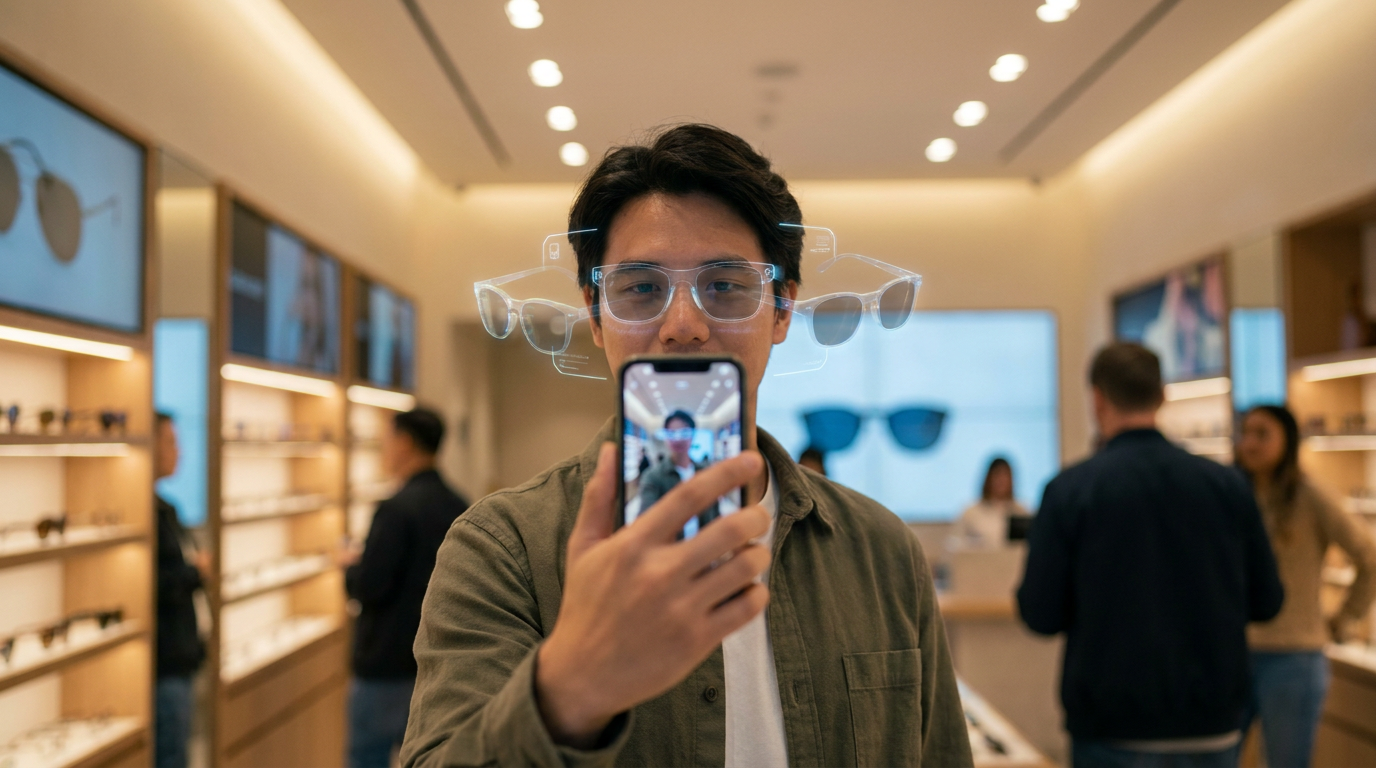
Virtual try on technology is changing how shoppers interact with products before they buy. Instead of guessing whether a pair of glasses suits their face, whether a sofa fits their living room, or whether a lipstick shade matches their skin tone - shoppers can now see the answer instantly through their phone camera.
For retail brands this is a measurable commercial tool that reduces returns, increases purchase confidence, and shortens the journey from consideration to conversion. This guide covers how virtual try on works, which categories benefit most, and how it drives measurable retail results.
Table of Contents
What Is Virtual Try On?
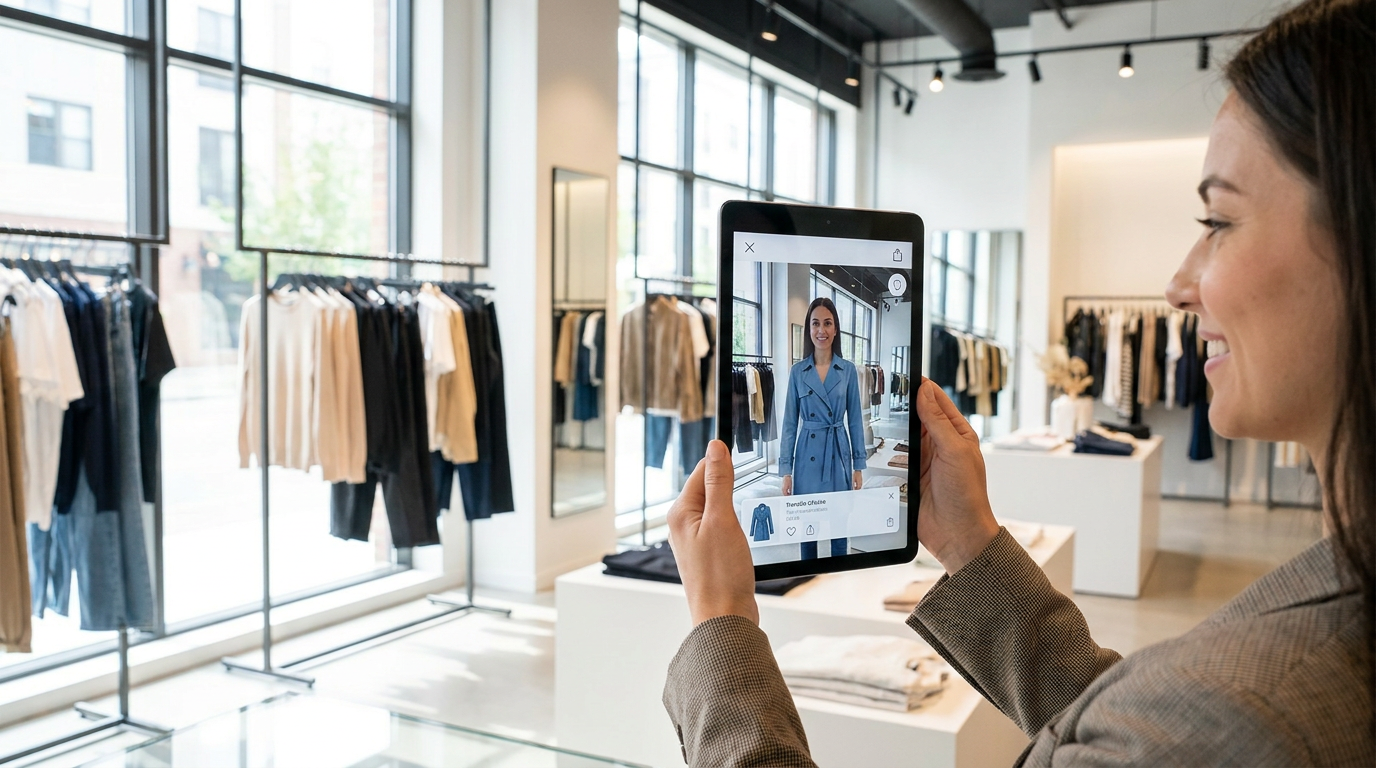
Virtual try on is an augmented reality technology that overlays a digital representation of a product onto a live camera view in real time. Glasses stay on a moving face, furniture scales correctly to a room, clothing adapts as the shopper turns. The experience runs in a mobile browser with no headset required.
The technology sits within AR product visualisation - tools that let customers interact with digital product representations before purchasing. Virtual try on refers specifically to the real-time placement of products onto people or environments.
Virtual try on is one component of Mimic Retail's product visualisation services including 3D product models, interactive displays, and immersive digital experiences for online and in-store retail.
How Virtual Try On Technology Works
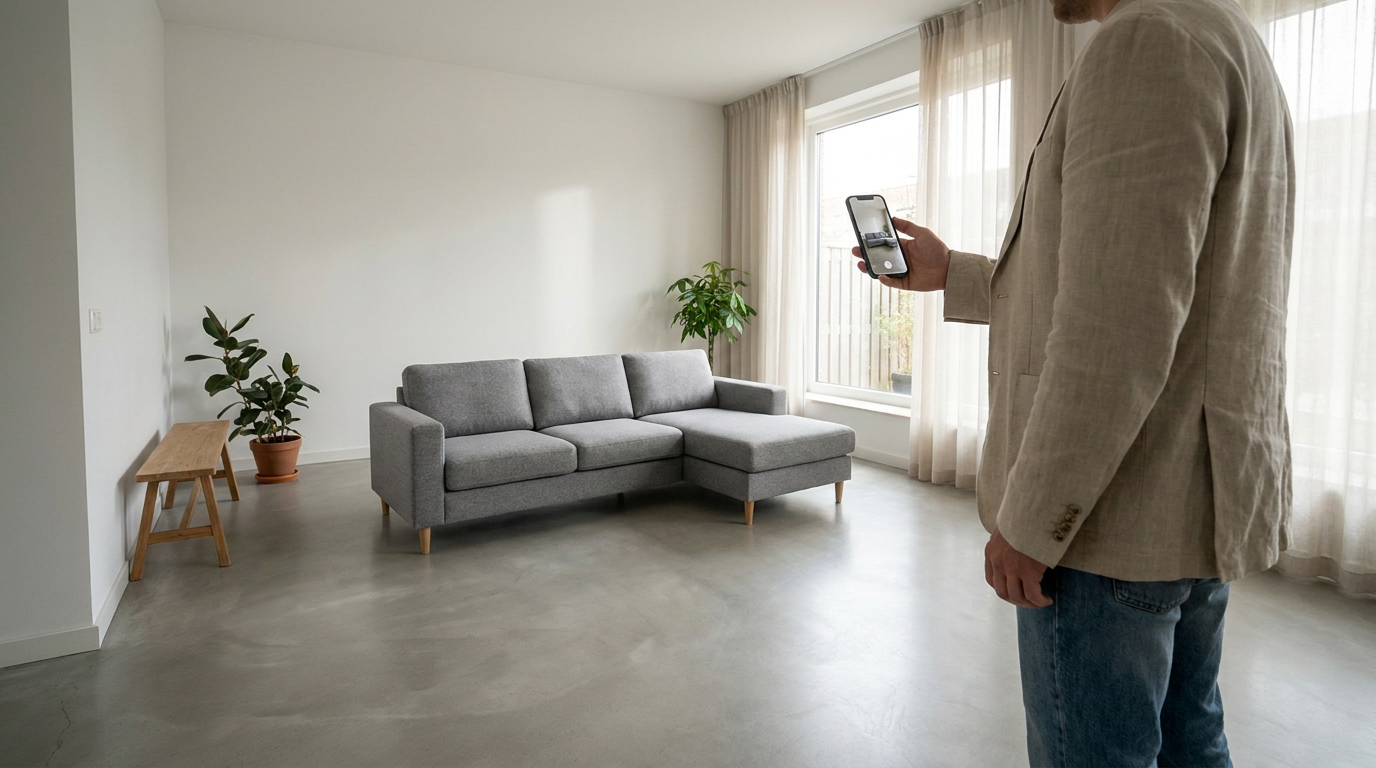
Virtual try on combines computer vision, 3D modelling, real-time rendering, and device camera access. Detection runs first - the system maps the shopper's face, body, or room surface depending on the product category. A 3D model then renders at the correct scale and lighting. The shopper can switch variants instantly without restarting the experience.
The Technology Behind It
3D models are pre-built from photogrammetry or 3D scanning. The quality of these models directly determines how realistic the experience feels - accurate 3D with correct lighting looks convincing, flat 2D overlays do not. For clothing, AI body estimation calculates how fabric will drape and move. For furniture, depth sensing estimates room dimensions and places the product at exact real-world scale.
This pipeline runs on Mimic Retail's XR integration technology stack which handles real-time rendering, device compatibility, and deployment across mobile browsers and in-store kiosks.
Virtual Try On for Fashion and Clothing
Fashion is the most commercially established category for virtual try on. Online clothing return rates run at 25 to 40 percent depending on the product type - when shoppers cannot assess fit or proportion they buy multiple sizes and return most of them. Virtual try on addresses this directly by letting shoppers see proportions, colours, and styling before any order is placed.
Eyewear:The most technically mature category. Face-mapping is highly accurate, the product is rigid, and the value of seeing glasses on your own face before buying is immediately clear to shoppers.
Clothing and outerwear:Body-mapping renders garments with realistic drape. AI body estimation advances have significantly improved clothing try on accuracy.
Watches and jewellery:Wrist-mapping shows how a watch looks at actual scale. Ring and bracelet fit can be visualised using hand-tracking.
Footwear:Foot and ankle tracking enables virtual shoe try on - particularly effective for trainers where appearance matters as much as fit.
For a broader look at how immersive technology shapes retail read our article on the role of 3D immersive experiences in the future of digital interaction.
Virtual Try On for Home and Furniture

Home and furniture is the second major category - often called AR room visualisation. The commercial case is strong: furniture is expensive, returns are logistically costly, and the primary purchase barrier is uncertainty about whether a piece will look right in the buyer's actual space.
AR room visualisation allows shoppers to place a 3D model of a sofa, table, lamp, or appliance into their physical room at actual scale via their phone camera. They walk around it, compare it to existing furniture, and check how it looks in their specific lighting - all before purchase.
Scale accuracy:A sofa that is 220cm wide renders at exactly 220cm in the room. Shoppers immediately see whether it fits their space.
Lighting response:Advanced implementations adjust product shading and reflections based on detected ambient lighting, making placement look natural.
Variant switching:Shoppers cycle through fabric colours, leg finishes, or configuration options while the product remains placed in their room.
Multi-product placement:Some implementations allow multiple products placed simultaneously - useful for styling an entire room before committing to any purchase.
Retailers using AR room visualisation consistently report significant reductions in return rates and increases in average order value as confident shoppers complete and keep their purchases.
Virtual Try On for Beauty and Cosmetics
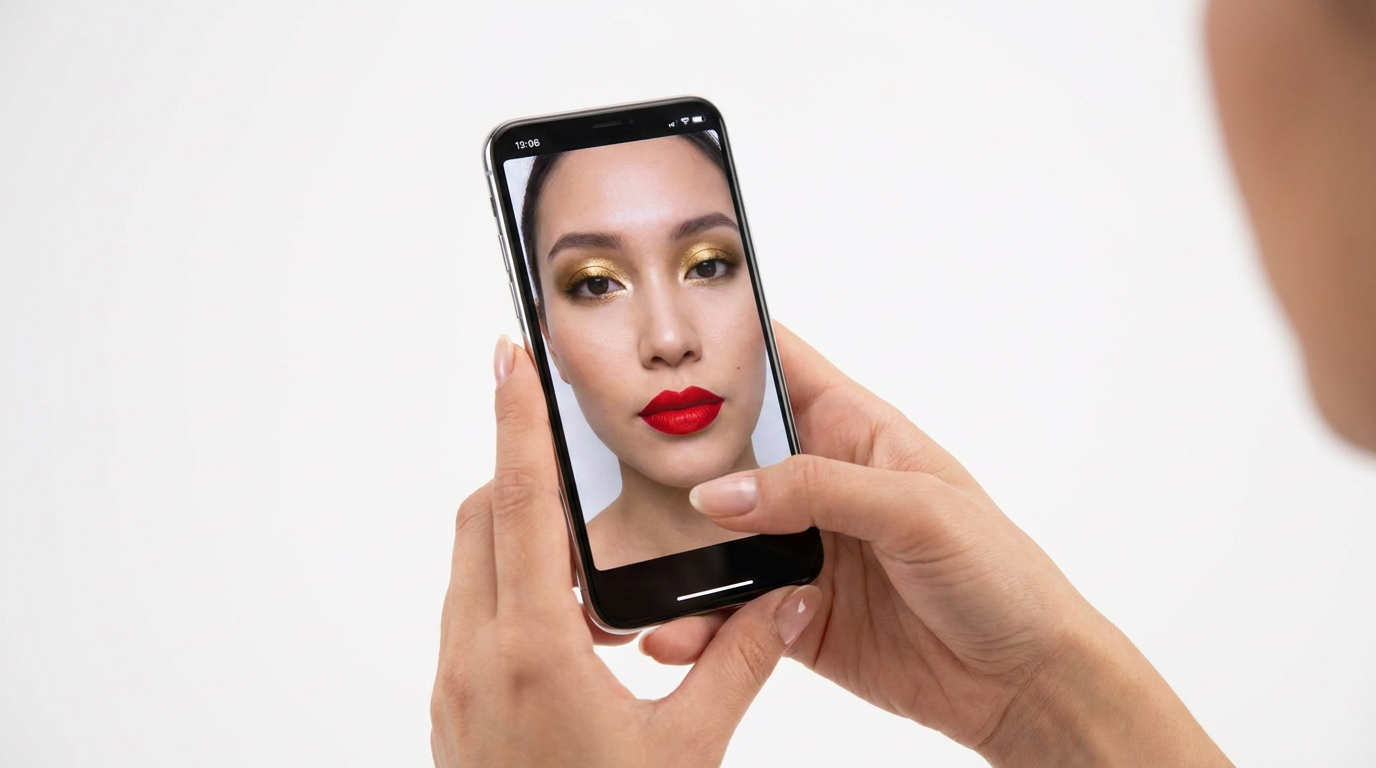
The beauty sector was an early adopter of virtual try on and remains one of its most active users. The try-before-you-buy barrier in cosmetics is significant - purchasing a lipstick shade or foundation without testing it on your own skin is a high-uncertainty decision that drives returns and hesitation.
AR beauty try on maps a shopper's face and applies a real-time simulation of cosmetic products - lipstick, eyeshadow, foundation, blush - that responds to facial movement and lighting changes. Shoppers switch between shades instantly and test products in different environments.
Shade matching:Seeing the actual shade on their own face is far more reliable than a swatch on a model. AR eliminates the core uncertainty in cosmetics purchasing.
Multi-product try on:Shoppers layer foundation, blush, and lipstick simultaneously to build a complete look before purchasing any individual item.
Instant switching:Switching between 20 lipstick shades in ten seconds drives product discovery and increases average basket size.
Personalised recommendations:AI-assisted beauty try on can analyse skin tone and recommend the shades most likely to suit the individual shopper.
This approach connects to how AI shopping assistants improve omnichannel retail by combining product knowledge with individual customer data.
How Virtual Try On Reduces Returns and Increases Conversions
Virtual try on addresses the two biggest commercial problems in online retail simultaneously: the uncertainty that prevents purchase completion and the misalignment between expectation and reality that drives returns.
Purchase confidence:When shoppers see exactly how a product looks on them or in their space, the primary source of purchase hesitation is removed. Conversion rates with virtual try on consistently outperform pages without it.
Return reduction:Returns driven by appearance mismatch are eliminated for shoppers who used virtual try on before purchasing. The expectation gap that drives appearance-related returns is removed.
Longer session time:Shoppers engaging with virtual try on spend more time on product pages and interact with more variants - correlating with higher purchase intent and larger basket values.
Lower acquisition cost:Strong virtual try on experiences generate organic sharing and word-of-mouth that advertising cannot replicate, improving customer acquisition efficiency.
Omnichannel consistency:Virtual try on that works identically online and in-store creates a consistent brand experience across touchpoints.
The broader evidence base on how virtual reality shopping reduces product returns shows the same mechanism at work whether the technology is VR or AR.
For the full picture of AI and technology investment in retail, read our guide on using AI for ecommerce to scale without increasing headcount.
Frequently Asked Questions
1. What is virtual try on technology?
Virtual try on is an augmented reality technology that overlays a digital 3D model of a product onto a live camera view in real time. Shoppers use their phone camera to see how glasses look on their face, how furniture fits in their room, or how a lipstick shade appears on their own skin - before making a purchase decision.
2. Does virtual try on require a special app?
Most modern virtual try on implementations run directly in a mobile browser using WebAR - no app download required. Shoppers access the experience from a product page and it opens in the browser camera view. Native app implementations offer higher performance but the download barrier reduces adoption significantly.
3. How accurate is virtual try on for clothing?
Accuracy varies by implementation. Face and surface mapping for eyewear and furniture are highly accurate. Clothing try on is more complex due to fabric drape simulation. The quality of the underlying 3D model is the primary determinant of how realistic any virtual try on experience feels.
4. What product categories benefit most?
The strongest commercial results are in eyewear, furniture, beauty and cosmetics, and footwear. These categories share a common characteristic: purchase decisions are heavily influenced by appearance and fit, and the inability to physically test a product is a major barrier to online conversion.
5. How does virtual try on reduce product returns?
Virtual try on eliminates appearance-driven returns - cases where the product does not look how the shopper imagined. When shoppers have seen the actual product on their face, body, or in their room before purchasing, the expectation gap that drives most appearance-related returns is removed.
6. Can virtual try on be used in physical retail stores?
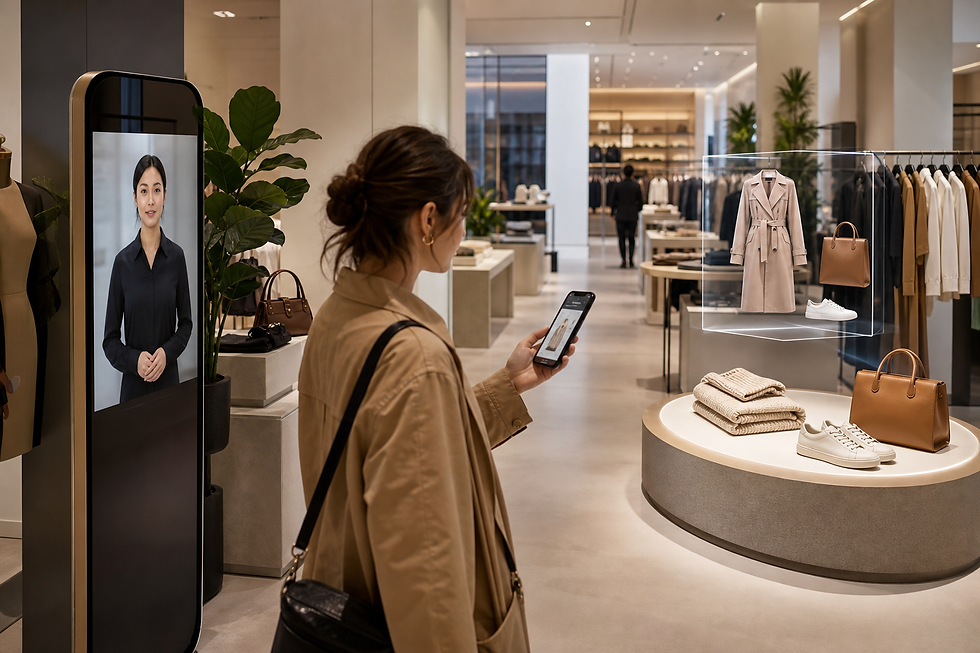
Yes - virtual try on deploys on in-store kiosks, tablets, or smart mirrors, extending the range of variants available to try without holding full stock. A shopper can try all 40 colour variants on a kiosk even when only 5 are stocked on the shelf.
7. How does Mimic Retail implement virtual try on?
Mimic Retail builds custom virtual try on experiences as part of its product visualisation service - including 3D model creation, AR integration, variant switching, analytics, and in-store deployment. Visit the services page for the full scope.
8. What analytics come with virtual try on?
Professional implementations track how many shoppers activated the feature, which variants they tried, session duration, and conversion rate of try-on users versus non-users. This data informs merchandising decisions and optimises virtual try on investment over time.
Add Virtual Try On to Your Retail Experience
Mimic Retail builds AR product visualisation and virtual try on experiences for retail brands - from fashion and beauty to furniture and consumer electronics. We handle 3D model production, AR development, web and app deployment, in-store integration, and analytics. Explore our product visualisation services or visit our technology overview to see how we build these experiences. Get in touch to discuss your project.


Comments