The Role of 3d Immersive Experiences in the Future of Digital Interaction

Screens, feeds, and flat interfaces have defined digital life for the past two decades. But we’re now moving into a world where space becomes part of the interface: where people step into worlds, stand next to digital characters, and interact with data as if it’s physically present. This is where 3d immersive experiences become the new medium for communication, storytelling, and interaction.
From virtual worlds and spatial apps to AI-driven digital humans, these experiences are transforming how brands, creators, and organizations connect with audiences. Instead of simply watching a screen, users participate in a scene. As hardware, real-time 3D engines, and AI converge, 3d immersive spaces are becoming the “next layer” of the internet.
Table of Contents
From Flat Screens to Spatial Worlds
For years, most digital interaction has been limited to 2D interfaces: web pages, mobile apps, dashboards, and video. Now, a new paradigm is emerging where users move from viewing to inhabiting digital environments. This is the essence of 3d immersive interaction: the user is no longer outside the experience, but inside it.
Instead of clicking buttons on a flat UI, people:
Walk through virtual environments
Interact with digital humans and AI characters
Manipulate objects in space with natural gestures
Experience narratives that unfold around them
In this paradigm, the “page” becomes a spatial scene, the “cursor” becomes your body, and the “content” becomes a living environment that responds to your presence.
For brands and storytellers, this unlocks a new grammar of interaction: spatial pacing, proximity, gaze, and embodied presence all shape how meaning is conveyed inside a 3d immersive world.
Core Technologies Behind Immersive 3D Interaction
Under the hood, a collection of advanced technologies converges to make all this possible. Together, they enable responsive, believable, and emotionally engaging experiences in real time.
Key components include:
1. Real-Time 3D Engines
Engines like Unity, Unreal Engine, and custom real-time render pipelines power:
High-fidelity environments
Dynamic lighting and shaders
Realistic physics and object interaction
Cinematic camera systems for storytelling
These engines allow creators to build responsive digital stages where every interaction, animation, and effect can react live to user behavior.
2. Spatial Computing and Sensors
Spatial computing bridges the physical and digital:
Head-mounted displays and XR headsets
Depth sensors and cameras for body, hand, and face tracking
Room scanning for spatially aware content
This layer lets a 3d immersive experience adapt to your physical surroundings, enabling mixed reality overlays, world anchoring, and location-based storytelling.
3. AI-Driven Characters and Avatars
AI brings agency and intelligence into the scene:
Conversational AI powering interactive avatars
Behavior trees and cognitive models for believable reactions
Emotion-aware dialogue and performance
This is where interactive digital humans become guides, hosts, sales agents, or co-stars in the narrative. For a deeper dive into how brands use these characters to shape journeys, you can explore Mimic’s article on how brands use interactive avatars to build immersive customer journeys.
4. Cloud and Real-Time Networking
Multi-user experiences require:
Low-latency networking
Session management and state sync
Scalable back-end for concurrent users
This enables shared 3d immersive worlds where people can collaborate, play, learn, or attend events together from anywhere.
Comparison Table
Below is a high-level comparison between traditional 2D digital interaction and spatial, immersive 3D environments.
Aspect | Traditional 2D Interfaces | 3D Immersive Experiences |
User Perspective | Observer, outside the content | Participant, inside the scene |
Input Methods | Mouse, keyboard, touchscreen | Body movement, gaze, gesture, voice, controllers |
Emotional Engagement | Mostly cognitive | Cognitive + embodied + emotional |
Sense of Presence | Low | High – feeling of “being there” |
Storytelling Style | Linear, screen-based | Spatial, multi-perspective, interactive |
Collaboration | Side-by-side screens, video calls | Shared virtual spaces, co-present avatars |
Brand Expression | Static layouts and media | Living spaces, characters, dynamic worlds |
Data Interaction | Charts and lists | Spatialized data, holographic dashboards |
Memory Retention | Moderate | Often higher due to embodied engagement |
Hardware Requirements | Phone, laptop, monitor | XR headsets, AR devices, or powerful 3D-enabled rigs |
This shift from 2D to 3d immersive interaction mirrors the transition from printed pages to web pages—only now, the medium itself is spatial and experiential.

Applications Across Industries
The impact of immersive 3D interaction is already visible across sectors, with organizations using it for training, storytelling, commerce, and more.
1. Entertainment and Media
Virtual concerts, live performances, and fan meetups
Narrative experiences with branching storylines and spatial scenes
Interactive worlds anchored by digital humans and AI-driven characters
2. Marketing and Brand Experiences
Brands are using 3d immersive environments to move beyond simple campaigns and into ongoing “worlds” users can visit:
Virtual brand spaces and showrooms
Interactive product demos in 3D
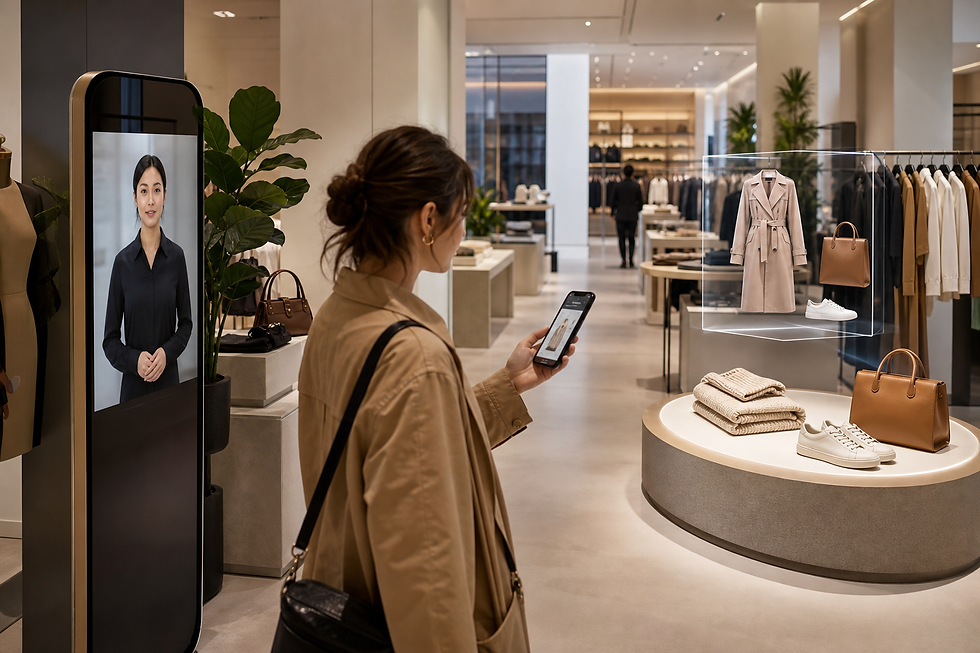
AI-driven brand ambassadors guiding customers through journeys
Mimic explores this in depth in their breakdown of how brands use interactive avatars to build immersive customer journeys, where avatars become the connective tissue across touchpoints.
3. Training and Simulation
High-stakes training for aviation, medicine, and manufacturing
Scenario-based learning in controlled but realistic environments
Soft-skill training with responsive virtual humans
By simulating real-world conditions, organizations can safely rehearse complex procedures and improve performance in ways that static e-learning modules cannot match.
4. Education and Learning
Virtual classrooms and labs
Exploratory learning in historical, scientific, or abstract worlds
Collaborative projects in shared 3D spaces
Spatial learning taps into embodied cognition—students remember more when they do rather than just read or watch.
5. Architecture, Design, and Digital Twins
Walkthroughs of buildings before they’re built
Interactive configurators for interiors, vehicles, and products
Digital twins of factories, stadiums, and cities for simulation and planning
Here, 3d immersive environments collapse the gap between blueprint and lived experience.
6. Customer Experience and Support
Virtual assistants that appear as believable characters
Guided onboarding inside products or services
Spatial help systems that point, show, and demonstrate
As AI and avatars become more capable, customer journeys are increasingly mediated by digital characters rather than static FAQs.
Benefits
Immersive 3D interaction brings a wide range of advantages that go beyond visual fidelity.
1. Stronger Emotional Connection
Spatial presence creates a deeper sense of “being there”
Characters and environments can evoke empathy and trust
Narrative moments become more memorable when experienced physically
2. Higher Engagement and Retention
When users move, look, and interact within a 3d immersive environment, they’re more actively involved:
Reduced passive consumption
Longer session times
Better recall of information and brand messages
3. More Natural Interaction
Gesture, gaze, and body language can act as input
Voice interaction with AI-driven avatars
Context-aware responses based on proximity or focus
This makes interfaces feel less like tools and more like social or spatial encounters.
4. Richer Storytelling and Narrative Possibilities
Multiple perspectives within the same narrative space
User choices affecting path and pacing
Environmental storytelling through props, lighting, and sound
5. Competitive Differentiation
Brands and organizations that invest early in 3d immersive experiences can:
Stand out in crowded digital channels
Create signature worlds that are hard to copy
Build persistent spaces users can revisit over time
Challenges
Despite the promise, there are real challenges to building and scaling these experiences.
1. Hardware Barriers and Accessibility
Not all users have XR headsets or high-end devices
Comfort and ergonomics can limit session length
Need for designs that gracefully degrade to 2D when required
2. Production Complexity
Worldbuilding, character performance, and interaction design require specialized skills
Real-time optimization is essential for performance and comfort
Pipelines need to integrate mocap, AI, real-time rendering, and narrative design
Mimic’s article on designing immersive experiences that blend storytelling, spatial computing, and real-time interaction dives into the complexity of balancing narrative, space, and technology.
3. UX and Safety Considerations
Preventing motion sickness and cognitive overload
Designing for clear navigation and orientation
Ensuring users feel safe, comfortable, and in control
4. Content Longevity and Maintenance
Persistent worlds require ongoing updates
AI characters need regular tuning and improvement
Analytics and live-ops are necessary to keep experiences relevant
5. Ethical and Privacy Concerns
Spatial data, biometrics, and behavioral data must be handled responsibly
Representation and behavior of digital humans must respect user dignity
Transparency around AI-driven agents is critical
These barriers mean that simply “adding 3D” or “adding VR” is not enough. A thoughtful, human-centered strategy is necessary to make 3d immersive experiences truly valuable.

Future Outlook
Looking ahead, several trends are converging to make immersive 3D interaction a core layer of digital life.
1. More Capable and Accessible Hardware
Lighter, more comfortable headsets
Mixed reality devices that integrate into everyday workflows
Spatial computing becoming as normal as smartphones
As friction drops, 3d immersive interfaces will transition from novelty to default in specific domains like training, design, and high-value customer touchpoints.
2. AI-Native Experiences
Avatars with memory, personality, and evolving behavior
Scenes that adapt in real time to user goals and emotions
Generative environments that reconfigure themselves dynamically
The line between “content” and “system” will blur as scenes become more like living organisms—reactive, adaptive, and co-created with users.
3. Connected Worlds and Persistent Spaces
Branded worlds that persist over time
Cross-platform identity for avatars and digital humans
Seamless movement between 2D and 3D touchpoints
Here, an experience might start on a website, continue in a virtual showroom, and evolve into a long-term relationship with a digital brand representative. Insights from Mimic’s work on storytelling, spatial computing, and real-time interaction help define how these journeys can be designed holistically.
4. Real-Time Virtual Production and Performance
Performance capture driving real-time characters
Live shows featuring virtual performers and digital doubles
Hybrid productions mixing physical sets and virtual stages
This overlaps with virtual production and mocap workflows, where 3d immersive performance spaces become both creative tools and final mediums.
Conclusion
Spatial interfaces, virtual worlds, and AI-driven digital humans are reshaping the future of digital interaction. Instead of merely scrolling through screens, people will increasingly step into 3d immersive environments where they can explore, learn, connect, and co-create.
For brands and organizations, this shift is both a challenge and an opportunity. It demands new skills—spatial storytelling, real-time production, behavior design—but offers new ways to build meaningful, memorable relationships with audiences.
Studios like Mimic sit at the intersection of performance capture, digital humans, and immersive interaction, helping partners design and build these next-generation experiences. As spatial computing, AI, and real-time 3D continue to converge, those who invest early in immersive worlds and intelligent characters will be best positioned to lead in the next era of digital interaction.
FAQs
1. What is a 3d immersive experience?
A 3d immersive experience is a digitally created environment where users feel present inside the scene, often via VR, AR, or mixed reality. They can move, interact with objects and characters, and influence how the experience unfolds.
2. How is this different from traditional 3D graphics?
Traditional 3D graphics are typically viewed on flat screens in a non-interactive or limited-interaction format (like films or static renders). Immersive 3D adds spatial presence, real-time interaction, and often embodied input like head movement, gestures, and full-body tracking.
3. Do users need VR headsets to access immersive experiences?
Not always. While headsets offer strong presence, many immersive 3D experiences can run on desktop, mobile, or web using mouse, touch, or simple motion input. The same scene can often be designed to support multiple “degrees of immersion.”
4. How do brands benefit from building immersive 3D experiences?
Brands gain new ways to tell stories, showcase products, and build relationships. Interactive avatars, virtual spaces, and spatial narratives can increase engagement, conversion, and loyalty by making interactions more memorable and emotionally resonant.
5. What skills are needed to create these experiences?
Teams typically combine:
Real-time 3D artists and technical artists
Interaction and UX designers
Narrative designers and writers
AI specialists for digital humans and behavior
Engineers for networking, back-end, and tooling
Studios like Mimic bring these disciplines together into cohesive pipelines.
6. How do AI avatars fit into immersive 3D worlds?
AI avatars serve as guides, hosts, sales agents, trainers, or characters. They can talk with users, respond in real time, and adapt to context. When placed inside 3d immersive environments, they add social presence and structure to the experience.


Comments